
How to Do a Banded Ankle Distraction
Table of Contents
What Is Banded Ankle Distraction?
Banded ankle distraction is a mobility exercise that uses a resistance band to create a pulling force around the ankle while you move the foot through flexion and extension. In simple terms, the band helps create space and tension around the joint while you actively point and pull the foot.
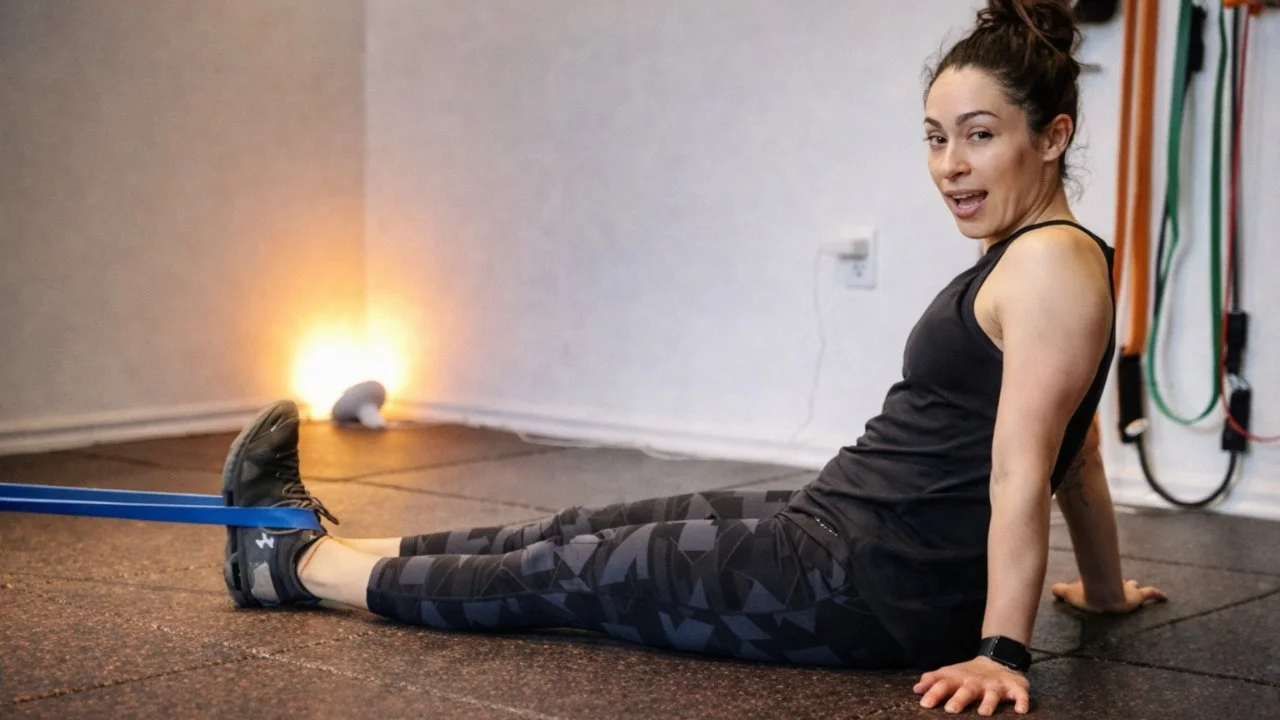
A common way to set it up is by crossing the band over the top of the foot and around the ankle, then moving far enough away from the anchor point so the band pulls the foot forward. From there, you go through a repeated motion of pulling the toes up and then relaxing or pointing the foot down.
Some people casually call this “pumping the gas pedal” because the movement looks like pressing and releasing a pedal. Whatever name you use, the main idea is the same: use the resistance band to help mobilize the ankle while training controlled movement.
You can also add banded ankle dorsiflexion to your routine, since it pairs well with banded ankle distraction for improving ankle mobility and control.
How to Do Banded Ankle Distraction
To do this exercise, you will need a resistance band attached to a sturdy anchor point.
Start by placing your foot into the band. Instead of leaving the band open, cross it over so it forms a crisscross pattern above the ankle and across the top of the foot. Then place your toe through the middle so the band sits securely around the ankle area.
Once the band is in position, slide back until you feel resistance pulling on the foot and ankle. You may already feel a stretch before you even start moving, which is normal.
From there, begin moving the foot through two basic actions:
Pull the toes up toward you into dorsiflexion
Relax or point the toes down into plantar flexion
You will repeat that motion slowly and under control. Think of it like pressing and releasing a gas pedal. Pull the foot up against the band, then let the band guide the foot back down. Keep the movement smooth rather than jerky.
Make sure the band is secure before you begin, and only move within a comfortable range. You should feel tension and a stretch, but not pain.
Benefits of the Banded Ankle Distraction
This exercise does more than just feel good in the moment. It can be useful for improving ankle function in a few different ways.
1. Helps improve ankle mobility
The main benefit of banded ankle distraction is improved ankle movement. If your ankles feel tight during squats, lunges, step-ups, or walking, this drill can help you work through that stiffness in a controlled way.
2. Can reduce the feeling of tight ankles
A lot of people notice that this exercise feels relieving almost immediately. The tension from the band combined with active foot movement can create a strong stretch and mobility effect around the ankle joint.
3. Strengthens the front of the lower leg
When you pull the toes upward against resistance, you work the tibialis anterior, the muscle at the front of the shin. That can be helpful for people who want to build strength in the lower leg and improve ankle control.
4. May help people prone to shin splints
Because the tibialis anterior is involved, this drill can be useful for runners and active individuals who deal with lower leg tightness or are prone to shin splints. It is not a cure-all, but it can be a helpful part of a broader strength and mobility routine.
5. Useful for runners and active individuals
This is a solid option for people who run, hike, lift weights, or play sports. It can be especially helpful for trail runners and anyone who needs stronger, more mobile ankles for uneven surfaces and repetitive impact.
Tips for Better Form
To get the most out of the movement, make sure the band is crossed securely over the top of the foot and ankle. You want enough resistance to feel the pull, but not so much that the movement becomes forced.
Keep the motion controlled as you point and flex the foot. Do not rush through reps. The goal is to feel the ankle moving smoothly under tension.
If the position alone already gives you a stretch, that is okay too. You may feel benefit just from sitting in the setup before adding the pumping motion.