
Cossack Squat: How to Do It, Muscles Worked, Benefits, and Variations
Table of Contents
What Is a Cossack Squat?
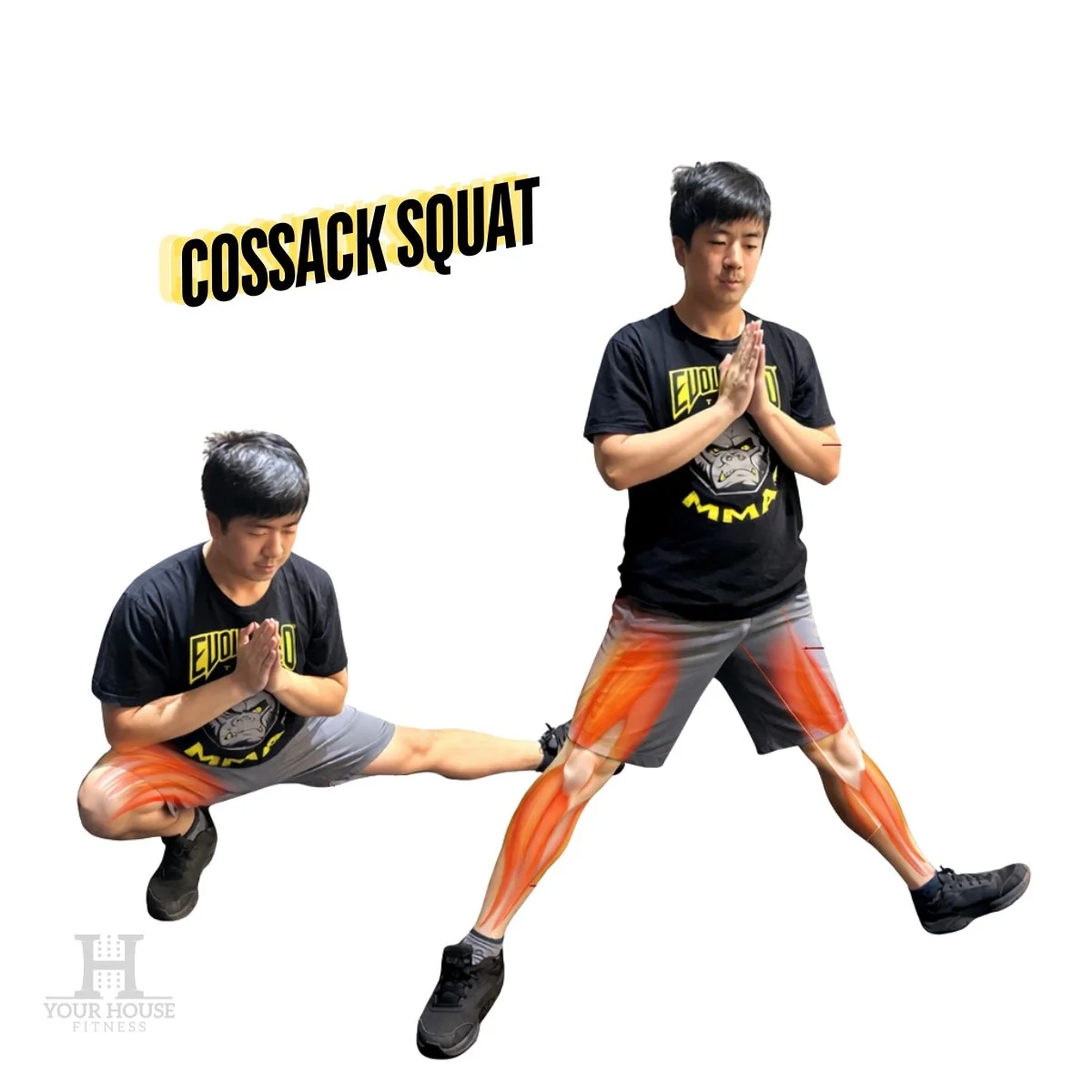
The Cossack squat is a lower body movement that resembles a squat but functions more like a deep lateral lunge. Instead of squatting straight down with both legs, you shift your bodyweight fully onto one leg while the opposite leg remains straight with the toes pointed upward. This exercise challenges strength, balance, and mobility, particularly through the hips and inner thighs.
How to Cossack Squat
Begin in a wide stance that is wider than a normal squat but still comfortable and controlled. Shift your weight onto one leg while keeping your chest upright and your spine neutral. Sit your hips down and slightly back over the working leg while allowing the opposite leg to straighten and the toes to lift toward the ceiling.
As you descend, keep the heel of the working leg planted and allow the knee to move outward naturally. Lower only as deep as your mobility allows while staying balanced. Push through the working leg to return to the top position, then repeat on the other side. Once comfortable, you can transition smoothly from side to side in a continuous motion.
Muscles Worked in a Cossack Squat
The Cossack squat targets several major muscle groups in the lower body. The adductors, or inner thigh muscles, are heavily engaged due to the wide stance and lateral loading. The glutes help stabilize the hips and drive the movement back to standing. The quadriceps assist with knee extension, while the hamstrings support hip control.
Additional muscles involved include the calves and ankles, which stabilize the foot and lifted-toe position, and the core muscles, which help maintain balance and posture throughout the movement.
Benefits of the Cossack Squat
The Cossack squat improves hip mobility and flexibility while strengthening the often neglected inner thigh muscles. It enhances lateral strength, balance, and body control, making it highly transferable to exercises such as sumo deadlifts and front squats. This movement also helps expose side-to-side imbalances and builds strength in deep ranges of motion, which can improve overall movement quality and reduce injury risk when progressed properly.
Variations of the Cossack Squat
Beginners may benefit from performing assisted Cossack squats by holding onto a stable object for balance. Partial-depth Cossack squats allow you to limit range of motion until mobility improves. Paused Cossack squats emphasize control by holding the bottom position briefly.
Alternatives to the Cossack Squat
If the full Cossack squat is not yet accessible, lateral lunges are a great starting point. Side-to-side box squats and sumo squats also help build similar strength patterns. Targeted adductor work using machines or cables, along with dedicated hip mobility drills, can further support progression toward the full movement.